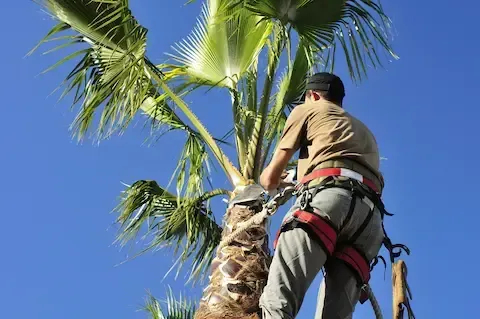
Pre-Hurricane Palm Frond Reduction in Chalmette LA
Every spring in Chalmette, the conversation among homeowners shifts to the same question: what can you do to keep your palms standing when a major storm rolls in off the Gulf? The answer is not removing the tree. It is not cutting it down to a bare pole, either. The most effective approach is a targeted pre-hurricane frond reduction that lowers wind resistance without stripping away the canopy tissue your palm needs to recover afterward. Done correctly and timed well, this single seasonal task can be the difference between a palm that rides out a storm and one that becomes a projectile hazard or a toppled mess in your yard.
What Pre-Hurricane Frond Reduction Actually Means
Frond reduction is not the same as a full palm trimming session. The goal during a standard maintenance trim is to remove dead, browning, or hanging fronds and keep the canopy looking tidy. Pre-hurricane frond reduction goes one calculated step further by removing additional live green fronds that are angled horizontally or slightly downward, since those are the ones that catch the most wind load during high-velocity gusts. By reducing the frond count strategically, you shrink the effective sail area of the canopy without touching the spear leaf or the active growth zone at the crown.
The critical rule is to never cut into the green fronds that angle upward toward the sky. Those upper fronds form a protective shell around the growing heart of the palm. Remove them and you risk exposing the meristem tissue to storm damage, fungal infection, and sun scorch. The goal is a leaner canopy profile, not a skeleton.
Why Chalmette Properties Face Higher Risk
St. Bernard Parish sits directly in some of the most active hurricane corridors in North America. Storms that make landfall near Grand Isle or push through the Breton Sound can arrive in Chalmette with sustained winds well above hurricane force and with very little warning time once the track locks in. Palms planted along Paris Road, Judge Perez Drive, and throughout the residential subdivisions off St. Bernard Highway are exposed to open fetch winds with limited canopy shielding from surrounding structures.
Windmill palms and sabal palms handle sustained wind reasonably well because of their flexible trunks, but that flexibility is reduced when frond load is excessive. Queen palms, which are common in yards throughout Chalmette because of their ornamental appeal, are significantly more vulnerable. Their trunks are less resilient and their frond crowns are larger relative to trunk diameter, meaning they act more like sails on a mast during high winds. Pre-storm frond reduction on queen palms is particularly important for this reason.
Timing the Work for Maximum Benefit
For southeast Louisiana, the practical window for pre-hurricane palm prep runs from mid-May through early June. That timing allows the palm roughly six to ten weeks before peak storm season to adjust to the lighter canopy, push out any stress response growth, and stabilize. Fronds removed during this period are also typically the ones that have reached full extension and are beginning their natural aging cycle anyway, so the cut is working with the tree's biology rather than against it.
Waiting until a named storm appears in the Gulf is too late. Palms cannot regenerate fronds in 48 hours, and crews are unavailable during mandatory evacuation windows. If you schedule the reduction in spring, you are covered for the full season rather than scrambling when a threat materializes. For a broader view of how seasonal care fits into year-round palm health, the local palm health overview covers the maintenance calendar in more detail.
Common Mistakes That Cause More Harm Than Good
The most damaging mistake homeowners and even some general tree crews make is over-pruning. In the industry, this is sometimes called hurricane cutting or hurricane pruning, and it describes a practice where fronds are removed aggressively until only a small tuft remains at the very crown. The idea behind it is intuitively appealing: less frond, less wind resistance. The problem is that this practice removes the fronds the palm needs for photosynthesis, weakens the trunk attachment zone, and increases vulnerability to the very storm damage it is supposed to prevent. Studies after major Gulf hurricanes consistently show that heavily pruned palms suffer more structural failures than properly maintained ones.
Another common error is using the wrong cutting angle or dull equipment. Clean cuts close to the trunk collar heal quickly. Ragged cuts or stubs left too long invite Ganoderma fungus, which is already present in many wet St. Bernard Parish soils. Any crew performing pre-hurricane palm tree care in the area should be using sanitized tools, especially when moving between trees, to prevent the spread of Fusarium wilt, which has been identified in palms along the Louisiana Gulf Coast.
What to Expect From a Professional Reduction Visit
A qualified crew will evaluate each palm individually rather than applying a single template to every tree in your yard. They will assess frond age, canopy density, trunk lean, and proximity to structures. Fronds below horizontal will typically be removed along with any dead or partially dead material. The crew should leave the canopy with a rounded or slightly upswept profile, not a flat-topped or heavily thinned silhouette.
After the work, the palm may appear slightly sparse compared to its pre-trim appearance. This is normal. Within four to eight weeks under normal growing conditions in Chalmette's heat and humidity, new frond growth will begin to fill in. The reduced canopy also allows more airflow through the crown, which is beneficial in the high-moisture environment along the lower Mississippi corridor.
Preparing the Rest of Your Property in Parallel
Palm frond reduction is one component of a broader storm readiness checklist. While fronds are being addressed, it is also worth inspecting the base of each palm for signs of trunk rot, root plate instability, or shallow anchoring. Palms planted in compacted fill soils common throughout parts of Chalmette may have root systems that are less extensive than palms growing in native ground. A palm that looks healthy above grade can still be at uprooting risk if the root ball has not spread adequately.
Coordinate frond reduction with any other pre-storm tree work on your property so crews can address the full picture in a single visit. Combining tasks improves efficiency and gives you a complete assessment of your yard's risk profile well before Atlantic storm season reaches its peak in late August and September.
