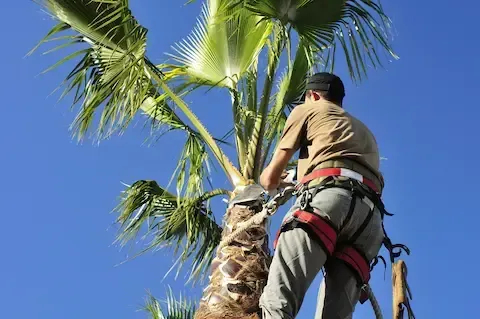
Palm Tree Care Across Chalmette LA Properties Year-Round
Palm trees define the look of Chalmette neighborhoods, lining driveways along Judge Perez Drive, anchoring backyard corners in Arabi, and standing sentinel along the levee-adjacent streets that run through St. Bernard Parish. They suggest permanence and resilience, but they demand more deliberate attention than most homeowners expect. Unlike live oaks or magnolias that largely manage themselves between storms, palms depend on year-round maintenance cycles to stay structurally sound, pest-free, and capable of surviving the intense weather pressure this region delivers annually. Understanding how palm tree care works across the full calendar year is the foundation of protecting your investment and keeping your property safe.
Why Palms in Chalmette Behave Differently Than in Other Climates
Southeast Louisiana sits in a climate band that is broadly hospitable to palms, but the specific conditions along the lower Mississippi River corridor impose stresses that palms in drier or more stable climates never face. Chalmette receives significant annual rainfall, often arriving in concentrated bursts during summer thunderstorms or tropical events. That moisture accumulation around root flares, combined with heavy clay soils common throughout St. Bernard Parish, creates conditions where root rot and fungal infections establish quickly if drainage is poor or tree bases are buried under mulch or soil grade.
The salt spray problem compounds this. Storm surges during hurricane season push brackish water across parish streets and into residential yards. Palms can tolerate moderate salinity exposure, but repeated salt loading on fronds and trunk tissue without proper rinsing degrades the waxy cuticle protection that palms rely on. If you reviewed earlier salt spray treatment notes for general landscape trees, many of those flushing principles apply directly to palm root zones following a significant weather event. The difference is that palms carry their growing point at a single terminal bud at the crown. If that growing point sustains damage from salt, disease, or cold, the entire tree cannot recover. This is why proactive care matters far more for palms than reactive repair.
The Trimming Window and Why It Matters More Than Frequency
One of the most common errors Chalmette palm owners make is trimming on an arbitrary schedule rather than a biologically sensible one. Many property owners trim palms every spring as a cosmetic reset, but timing relative to hurricane season and natural frond drop cycles determines whether trimming helps or harms the tree.
The optimal trimming window in this region runs from late winter through early spring, roughly February through early April. Trimming within this window accomplishes several things simultaneously. It removes dead and dying fronds that accumulated over the prior year, eliminates potential harborage for palm weevils and other pests that colonize decaying tissue, and reduces the wind sail area of the canopy before the Atlantic hurricane season opens in June. A properly trimmed palm presents less resistance to high winds, which reduces the torque load on the root system during tropical storms.
What you want to avoid is over-trimming, often called hurricane cutting, where nearly all fronds are removed in an attempt to storm-proof the tree. Research consistently shows that this practice weakens palms significantly. Green fronds are not dead weight. They are the photosynthetic engine of the tree. Removing living fronds forces the tree to pull nutrients stored in the trunk, depleting reserves the palm needs to push new growth and repair storm damage. The rule of thumb used by experienced arborists in this area is to remove only fronds that hang below a horizontal plane at the base of the crown. Anything growing at or above horizontal continues to serve the tree and should stay.
Identifying and Managing Common Palm Diseases in St. Bernard Parish
The warm, humid conditions that make Chalmette hospitable to palms also favor a range of fungal and bacterial pathogens. Knowing what to watch for allows early intervention before a manageable problem becomes a structural or fatal one.
Ganoderma butt rot is one of the most serious threats to mature palms in this region. Caused by the fungus Ganoderma zonatum, this pathogen attacks the lower trunk and root system, breaking down the structural integrity of the wood from the inside. External signs include conk formations, which look like shelf mushrooms, appearing at or near the base of the trunk. By the time a conk is visible, the internal decay is already extensive. There is no cure. Affected trees must be removed promptly to prevent fall hazards and to reduce spore loads in the soil that can infect nearby palms.
Leaf spot diseases caused by Exserohilum and Bipolaris species are more manageable. These appear as brown lesions on fronds, sometimes with yellow halos, and typically follow periods of prolonged wet weather. Improving airflow around the canopy through appropriate trimming and avoiding overhead irrigation can reduce incidence significantly. Fungicide applications are available but work better as preventive treatments than cures once infection is established.
Lethal bronzing, formerly called Texas Phoenix Palm Decline, has been detected in Louisiana and deserves attention from Chalmette property owners growing Phoenix species including Canary Island date palms and Sylvester palms. The disease is caused by a phytoplasma transmitted by a leafhopper insect vector. Symptoms progress from flower bract browning to frond yellowing moving upward from the lower canopy, eventually reaching the spear leaf and killing the growing point. Trunk injections of oxytetracycline can halt progression if the disease is caught early, but diagnosis must be confirmed before treatment begins. A certified arborist familiar with this pathogen is necessary for accurate identification.
Nutritional Needs of Palms in Coastal Louisiana Soils
Palms have very specific nutritional requirements that differ from broadleaf landscape trees, and general-purpose fertilizers often do more harm than good when applied to palms. The most common nutrient deficiencies in this region are potassium, magnesium, and manganese. Each presents distinctive symptoms, and treating the wrong deficiency wastes resources while the actual problem continues to develop.
Potassium deficiency is extremely common in sandy or well-leached soils and shows as translucent orange-brown spotting on older fronds. In heavy clay soils like those found across much of Chalmette, potassium may be present but unavailable due to soil chemistry imbalances. Magnesium deficiency produces a distinctive yellowing band along the margins of older fronds while the center of the frond remains green. Manganese deficiency, sometimes called frizzle top, affects the newest emerging fronds, causing them to appear weak, frizzled, and pale rather than firm and richly colored.
The appropriate fertilizer for palms in this region is an 8-2-12-4 formulation or a product specifically labeled for palm use, applied three to four times per year. Granular slow-release fertilizers work best when broadcast evenly under the full canopy drip line and watered in thoroughly. Never pile fertilizer against the trunk base, as this promotes salt burn and root damage rather than healthy uptake.
Root Zone Management and Drainage Considerations
Many Chalmette properties sit on lots with naturally high water tables, particularly in neighborhoods closer to the Mississippi River or the marsh interface. Palms will tolerate brief flooding, but extended saturation of root zones, especially in warm months when fungal pathogens are most active, accelerates decline significantly. If standing water persists around a palm trunk for more than 48 hours after a heavy rain event, the drainage in that area requires evaluation.
Grade corrections, French drains, or simple soil amendments that improve infiltration can extend palm health significantly. The root flare, the point where trunk tissue transitions to root tissue, must remain visible at or slightly above grade. Palms installed too deeply or gradually buried by soil migration and mulch accumulation show stress symptoms that are often misread as disease or drought. Pulling back accumulated mulch and organic debris from the base of the trunk, maintaining a dry clear collar around the flare, is a simple practice that pays dividends across an entire property's palm collection.
Preparing Palms for Hurricane Season Specifically
Chalmette sits in one of the most active hurricane corridors in the continental United States. Properties here have experienced direct impacts from major storms, and the landscape shows the cumulative history of that exposure. Preparing palms specifically for the June through November window involves more than the trimming described earlier.
Inspect root zones before each season for signs of destabilization. Palms that have shifted slightly at the base, showing asymmetric lean that has changed over time, may have compromised root anchoring. Younger palms installed within the past two to three years are particularly vulnerable because their root systems have not yet fully integrated into the surrounding soil. These specimens may benefit from temporary guying with flexible straps and stakes, installed at low tension to allow some movement while preventing catastrophic uprooting in high winds.
Trunk condition assessments also belong on the pre-season checklist. Examine the trunk surface for soft spots, cracking at wound sites from prior trimming cuts, or insect boring galleries. Palmetto weevil larvae cause extensive internal damage that weakens the trunk structurally without necessarily producing obvious external symptoms until the damage is severe.
When to Call a Certified Arborist for Palm Work in Chalmette
Some palm maintenance tasks are appropriate for property owners working within reach of the lower canopy with proper tools. But a significant portion of palm care in the Chalmette market requires professional assessment and hands-on expertise. Crown work on palms taller than 15 feet carries real fall hazard risk and requires climbing or aerial equipment. Disease diagnosis for conditions like lethal bronzing or Ganoderma requires professional confirmation before any treatment investment is made. And structural risk assessments following storm events require trained eyes that can identify internal deterioration before it becomes a liability.
Working with a local provider familiar with St. Bernard Parish conditions, soil types, and the specific palm species inventory common in this area matters. Regional experience shapes treatment decisions in ways that general horticultural advice cannot. For comprehensive palm tree care that covers the full maintenance cycle described here, connecting with professionals who serve this specific corridor ensures the recommendations fit the actual conditions your property faces rather than generic guidelines developed for different climates and different soils.
Palm trees are a defining landscape feature of Chalmette and the broader St. Bernard Parish corridor. Treated with the same seasonal attention you give other high-value property assets, they reward that investment with decades of reliable performance, storm resilience, and the visual character that makes this part of southeast Louisiana immediately recognizable.
