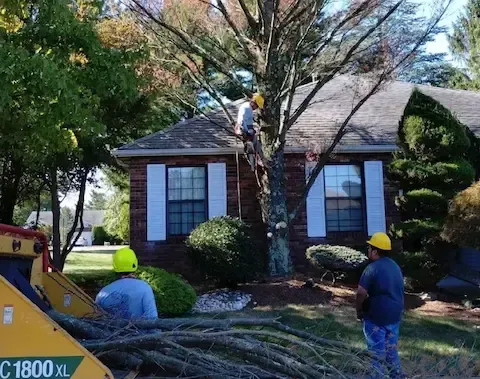
Post-Hurricane Tree Damage Assessment in St. Bernard Parish
Hurricane winds leave behind landscapes transformed by damage that ranges from obvious catastrophic failures to subtle structural compromises that won't manifest for months. Your trees in St. Bernard Parish need systematic evaluation after major storms to identify which specimens can recover, which require removal, and which need intervention to prevent delayed failure. The assessment process determines whether you're looking at thousands of dollars in emergency removal costs or manageable recovery through proper care.
Post-hurricane tree evaluation differs fundamentally from routine tree inspections. Storm forces create internal damage invisible from the ground, root systems sustain hidden injuries that compromise stability, and trees that appear salvageable immediately after impact may decline steadily over subsequent growing seasons. Understanding how to properly assess hurricane damage helps you make informed decisions about which trees to save and which pose unacceptable risks to your property.
Initial Safety Assessment in the First 24 Hours
Your first walk through the property after hurricane-force winds focuses entirely on identifying immediate hazards rather than cataloging every broken branch or stripped leaf. Safety takes absolute priority over damage documentation or recovery planning during this initial phase.
Scan for hanging branches suspended in tree canopies before walking beneath any trees. These widow-makers appear stable but can fall without warning, particularly as winds continue gusting after the storm's passage or as rain-soaked wood gains weight. Branches larger than four inches in diameter hanging more than 10 feet above ground create serious injury risks. Mark trees containing hanging debris with flagging tape and maintain a safe distance until professional removal occurs.
Identify trees or large limbs resting on structures even when they haven't penetrated roofs or walls. The weight continues stressing the building, and any shift in position could convert minor contact into major structural damage. These situations require professional stabilization and removal regardless of the tree's overall condition or long-term viability. Don't attempt to move or cut trees in contact with buildings without proper equipment and expertise.
Check for root exposure or soil heaving around tree bases. Trees that moved during the storm but didn't completely topple have compromised root systems that may fail progressively over hours or days. Soil mounding on one side of the trunk paired with depression on the opposite side indicates the tree is actively uprooting. These trees need immediate professional evaluation because their stability continues degrading until properly addressed.
Note any trees leaning significantly that weren't leaning before the storm. Small trees under 20 feet tall that develop leans less than 15 degrees from vertical sometimes re-establish if the root damage is minimal. Larger trees or those leaning more than 20 degrees rarely recover acceptable stability and typically require removal. Never assume a leaning tree is stable enough to walk beneath while assessing other damage.
Document power line involvement carefully from safe distances. Trees or branches contacting electrical lines create electrocution hazards that persist for days after storms. Assume all downed lines are energized regardless of whether they're sparking or appear inactive. Report these situations to your utility provider and keep everyone away from the area until the power company confirms lines are de-energized or removed.
Evaluating Structural Damage to Trunks and Major Limbs
Once immediate hazards are identified and secured, detailed evaluation of structural damage determines which trees might recover and which face inevitable decline. The trunk and major scaffold branches form the tree's structural skeleton, and damage to these components usually proves more significant than canopy loss.
Examine trunk splits and cracks running vertically along the main stem. Surface cracks less than one inch deep that don't extend more than two feet vertically often heal without compromising the tree's structural integrity. Deep splits that penetrate more than one-third of the trunk diameter or extend for several feet indicate severe structural failure that won't heal properly. Trees with major trunk splits typically continue declining as decay organisms colonize the wound and the weakened trunk becomes increasingly unstable.
Assess bark damage and stripping caused by impact from flying debris or contact with other falling trees. Bark wounds that expose cambium tissue covering less than 25% of the trunk's circumference generally heal, though the process takes years and leaves permanent scars. Girdling injuries that remove bark around 50% or more of the circumference often prove fatal as the tree loses vascular tissue necessary for transporting water and nutrients. These trees may leaf out normally the following spring but typically decline rapidly within two to three years.
Study branch attachment points where major limbs join the trunk. Torn or partially failed branches that remain attached create ongoing hazards and won't heal properly. The ragged tear provides entry for decay organisms that spread into the trunk, and the weight of the damaged branch stresses the already compromised attachment. These branches require removal, and the resulting wounds need proper pruning cuts to promote healing and limit decay spread.
Check for split crotches where co-dominant stems have partially separated. V-shaped unions between stems of similar diameter are inherently weak, and hurricane winds often initiate failures that progress slowly over months. Trees with crotch splits extending more than 12 inches down from the union point rarely recover structural integrity sufficient to withstand future storms. The split typically continues expanding during subsequent wind events or heavy snow loads until complete failure occurs.
Look for twisting damage in trunks and major branches. Spiral cracks or bark that appears wrung like a towel indicate the tree experienced torsional forces during the storm. This type of damage creates internal fractures that compromise structural strength even when external damage appears moderate. Trees showing significant twisting damage decline progressively and often fail catastrophically during subsequent storms.
Root System Damage and Stability Concerns
Root damage often determines long-term tree survival more than visible canopy injuries, yet root assessment presents challenges because most of the root system remains hidden underground. Understanding indicators of root compromise helps predict which trees will decline despite appearing healthy above ground.
Investigate soil conditions around the base carefully. Cracks radiating outward from the trunk, soil mounding on one side paired with depression on the other, or visible root exposure all indicate the tree moved during the storm. Even minor movement damages fine root hairs responsible for water and nutrient uptake. Trees in St. Bernard Parish's heavy clay soils that experience root movement often struggle to re-establish adequate anchorage because the clay's plasticity prevents roots from regaining their original tight contact with surrounding soil.
Examine exposed roots for breaks, tears, or stripped bark. Structural roots within 10 feet of the trunk provide most of the tree's anchorage and stability. Damage to these roots significantly compromises the tree's ability to remain upright during future wind events. Trees with 30% or more of their major structural roots visibly damaged or exposed typically can't be stabilized adequately and pose ongoing risks requiring removal.
Consider the root zone's saturation level during the hurricane. St. Bernard Parish's low elevation and poor drainage mean many areas remain saturated for extended periods after heavy rain. Trees growing in persistently wet soil during high winds uproot more easily than those in well-drained locations because saturated soil provides minimal resistance to root movement. Trees that survived the hurricane but grew in saturated conditions may have root systems damaged by the combination of wet soil and wind loading even without visible evidence at the surface.
Watch for progressive leaning in the weeks following the storm. Trees that continue tilting slowly indicate ongoing root failure. The root ball is pulling loose from the surrounding soil, and complete failure becomes increasingly likely. These trees require either immediate removal or professional stabilization using guy wires and proper anchoring systems. Simply propping the tree upright doesn't address the underlying root damage and creates false confidence in the tree's stability.
Note water pooling or changes in drainage patterns around trees. Soil compaction from falling trees or debris, erosion that exposes roots, or new low spots that collect water all affect root health going forward. Trees struggling with root damage need optimal soil conditions to recover, and secondary changes to the root environment can push marginally damaged trees into terminal decline.
Professional Root Assessment Techniques
Some root damage assessment requires specialized equipment beyond what homeowners can accomplish through visual inspection. Professional arborist reports utilize advanced techniques to evaluate hidden root system conditions when critical decisions about expensive tree removal depend on accurate stability assessment.
Air spade excavation removes soil from around the root collar using compressed air that doesn't damage living tissue. This technology exposes the critical zone where roots transition to trunk, revealing decay, damage, or girdling roots that compromise stability. The excavation shows exactly which structural roots remain intact and which sustained storm damage, providing definitive information about the tree's actual stability rather than educated guesses based on external symptoms.
Root collar examinations identify buried root flares and decay hidden beneath accumulated soil. Many St. Bernard Parish trees have root collars buried under several inches of soil from settling, landscaping changes, or debris accumulation over decades. This burial promotes root decay that weakens the tree's foundation. Storm forces can initiate failures in already weakened root systems, and excavation reveals whether observed instability results purely from storm damage or from pre-existing decay that the storm exposed.
Canopy Damage and Recovery Potential
While structural damage to trunks and roots often determines whether trees survive hurricanes, canopy damage affects the tree's ability to recover and regain functional form. Evaluating crown loss helps predict recovery timelines and whether salvageable trees will eventually return to acceptable landscape specimens.
Calculate the percentage of live canopy remaining after the storm. Trees retaining 50% or more of their original canopy typically recover within three to five years given proper care. Those losing 50% to 75% of their canopy can survive but require five to seven years to rebuild acceptable form and face increased stress during recovery. Trees stripped of more than 75% of their canopy rarely recover adequately, particularly if they're mature specimens over 40 years old. The energy required to rebuild such extensive canopy loss exceeds most trees' capacity, especially when combined with root damage.
Assess the distribution of remaining branches. Uniform canopy loss around the entire crown proves less damaging than one-sided stripping that leaves the tree severely unbalanced. Unbalanced trees develop lopsided growth patterns that persist for decades, creating aesthetic problems and structural weaknesses as the tree compensates for asymmetric weight distribution. Trees that lost entire sides of their canopy may require corrective pruning to remove portions of the remaining canopy and encourage more balanced regrowth.
Examine the types of branches lost versus those retained. Hurricane winds typically remove dead branches, weak attachments, and poorly structured growth first. If the remaining canopy consists primarily of well-attached, vigorous branches, recovery prospects improve significantly. Conversely, if strong branches broke while weak ones remained, the overall structural quality was likely poor before the storm, and the tree faces challenges beyond just canopy replacement.
Check for defoliation versus actual branch loss. Many St. Bernard Parish trees experience complete leaf stripping during hurricanes but retain their branch structure intact. These trees, particularly deciduous species, often recover completely within one to two growing seasons. The tree goes dormant prematurely, conserves energy through fall and winter, then produces normal spring growth. This scenario differs dramatically from trees that lost actual branches where recovery requires years of new growth.
Look for epicormic sprouting along the trunk and main branches. These shoots emerge from dormant buds beneath the bark in response to severe canopy loss. While epicormic growth helps the tree photosynthesize and produce energy during recovery, excessive sprouting indicates severe stress. The sprouts also attach weakly and require management through selective pruning to develop structurally sound replacement branches rather than dense, poorly attached thickets.
Species-Specific Recovery Characteristics
Different tree species respond differently to hurricane damage, and understanding species-specific recovery potential helps prioritize which damaged trees deserve investment in recovery care versus removal and replacement.
Live oaks demonstrate remarkable recovery capacity when structural damage is limited to canopy loss. Their strong compartmentalization response walls off wounds effectively, limiting decay spread. Even severe defoliation rarely kills healthy live oaks, and they typically produce vigorous regrowth within two seasons. However, live oaks with significant trunk splits or major root damage face the same poor prognosis as other species despite their general resilience.
Bald cypress trees native to wetland areas throughout St. Bernard Parish handle storm damage well when it's limited to branch loss. Their decay-resistant wood prevents rapid deterioration of wounds, and they produce steady replacement growth. However, cypress trees that uproot partially rarely re-establish adequate stability because their root systems don't regenerate effectively once damaged. These trees continue leaning progressively until they fail completely.
Water oaks suffer disproportionately from hurricane damage compared to other oak species. Their brittle wood and tendency toward internal decay mean even moderate storm damage often reveals pre-existing structural problems. Water oaks that lose major scaffold branches typically show extensive decay in the remaining trunk within two to three years. Their relatively short lifespan of 60 to 80 years means mature water oaks damaged by hurricanes rarely justify the expense of attempted recovery.
Southern magnolias respond poorly to severe defoliation but handle branch loss reasonably well if root systems remain intact. Their dense evergreen canopies provide less flexibility during high winds, but the trees compartmentalize wounds effectively and produce steady replacement growth. Magnolias that lean after storms rarely recover acceptable form because their dense canopies create constant leverage that prevents the tree from straightening as it grows.
Pine species including loblolly and slash pine decline rapidly after significant damage. Their inability to produce new shoots from older wood means canopy loss from branch removal creates permanent gaps. Pines also resist decay poorly, and large wounds often lead to fungal infections that hollow out the trunk. Pine trees that lose more than 40% of their canopy or sustain major trunk damage typically require removal within one to three years as decay progresses and stability deteriorates.
Creating a Damage Inventory and Action Plan
Systematic documentation of storm damage across your entire property creates the foundation for informed decision-making about tree removal, recovery investment, and insurance claims. A comprehensive inventory prevents overlooking significant damage and helps prioritize limited budgets toward trees offering the best recovery prospects.
Map all trees on your property showing storm damage severity. Use categories like critical removal required, urgent removal recommended, monitor for delayed failure, recovery candidate with intervention, and minor damage requiring only cleanup. This visual reference helps contractors provide accurate estimates and allows you to track changes in tree condition over subsequent months as delayed damage manifests.
Photograph damage from multiple angles including wide shots showing the tree's relationship to structures, medium-range images capturing overall damage patterns, and close-ups of specific injuries like trunk splits, torn branches, or exposed roots. Date all photos and maintain organized files by tree location or identification number. This documentation proves invaluable for insurance claims and provides baseline references for monitoring recovery or decline.
Prioritize actions based on risk level and recovery potential. Trees threatening structures or creating safety hazards require immediate removal regardless of their theoretical ability to recover. Trees with moderate damage and good recovery prospects in low-risk locations can receive proper care and monitoring. Severely damaged trees in areas where eventual failure wouldn't threaten property might be left standing to provide wildlife habitat while you monitor their decline.
Obtain professional assessments for trees where decisions aren't clear-cut. The cost of a detailed arborist evaluation ranging from $200 to $500 provides definitive information about structural integrity, stability, and recovery potential. This investment prevents premature removal of salvageable trees and identifies hidden problems in specimens that appear recoverable but actually face inevitable decline.
Develop realistic timelines for recovery work. Emergency hazard removal happens immediately, but complete debris cleanup, stump removal, and restoration work often spans months. Tree care to support recovery including proper pruning, wound treatment, and monitoring occurs over multiple growing seasons. Understanding these timelines helps budget appropriately and sets reasonable expectations for when your landscape will return to pre-storm condition.
Long-Term Monitoring and Recovery Support
Trees that survive hurricanes require ongoing attention through multiple growing seasons as they recover from injuries and rebuild lost canopy. Proper post-storm care significantly improves recovery outcomes and shortens the timeline for trees to return to functional landscape specimens.
Schedule follow-up inspections at three-month intervals for the first year after major storms. Storm-damaged trees often show delayed symptoms as stress accumulates, decay spreads, or root damage manifests through crown dieback. Regular monitoring catches these problems early when intervention might still save the tree or identifies deterioration requiring removal before the tree becomes an emergency hazard.
Provide supplemental watering during the first two growing seasons after significant damage. Reduced canopy means less water demand, but damaged root systems have decreased capacity to absorb available water. Deep watering weekly during dry periods supports recovery without promoting shallow root development. Apply water slowly over several hours using soaker hoses or drip irrigation rather than frequent shallow watering that doesn't reach damaged deep roots.
Avoid fertilization during the first growing season after major damage. Storm-stressed trees can't effectively use supplemental nutrients, and fertilization promotes excessive sprouting that creates more structural problems than benefits. Begin light fertilization in the second growing season if the tree shows vigorous recovery, but always use slow-release formulations that provide gradual nutrient availability rather than quick-release products that force unbalanced growth.
Prune epicormic sprouts selectively once growth patterns become clear. Remove sprouts growing directly from the trunk or from the underside of branches, but retain well-positioned sprouts that can develop into replacement scaffold branches. This selective thinning occurs over two to three years as the tree's recovery direction becomes apparent rather than removing all new growth immediately.
The hurricane assessment process determines whether your St. Bernard Parish property faces years of gradual tree recovery or immediate removal and replanting. Systematic evaluation separating genuine recovery candidates from trees in terminal decline focuses resources effectively and rebuilds your landscape's safety and aesthetic value efficiently.
