Saving a Heritage Live Oak on Chalmette Properties
A heritage live oak on a Chalmette property is not just a tree — it is a living piece of St. Bernard Parish history. Some of these oaks predate the subdivisions around them by decades or even centuries, spreading wide canopies that cool entire lots and define the character of streets and yards. But age, construction disturbance, soil compaction, and disease all take a cumulative toll. When an old live oak starts to show decline, the instinct is often to remove it and move on. That is rarely the right call. With a structured, patient approach, many heritage live oaks can be stabilized, reinvigorated, and preserved for another generation.
Recognizing the Signs That a Heritage Oak Is in Trouble
Decline in a mature live oak rarely happens overnight. The signs accumulate slowly, and by the time they become obvious, the tree has often been struggling for several years. Knowing what to look for helps you act before the situation becomes irreversible.
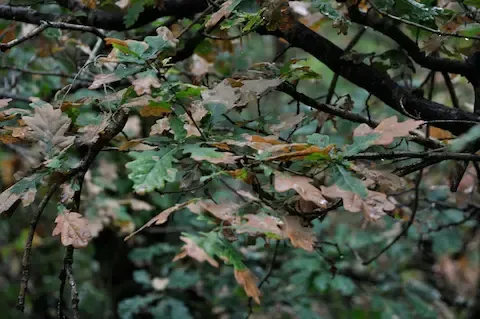
Common warning signs include dieback at branch tips, where leaves fail to fill in during spring flush. Thinning canopy density — where you can see more sky through the crown than you used to — is another reliable indicator. Bark that has developed unusual cracks, weeping wounds, or fungal conks signals internal stress or active decay. Leaves that are smaller than normal, pale green or yellowing, or that drop early in summer all suggest the tree is struggling to support its canopy.
On Chalmette properties near Belle Chasse Highway or in older Arabi-adjacent neighborhoods, soil disturbance from utility work or previous construction is a common hidden cause. Roots that were cut, crushed, or buried under fill material years ago can continue causing decline long after the original event.
Soil Decompaction as the Foundation of Recovery
The root zone of a live oak extends well beyond the drip line, and in residential settings, that zone is constantly under pressure. Foot traffic, parked vehicles, heavy mowing equipment, and decades of accumulated surface clay all compress the soil until oxygen and water can barely penetrate. A live oak cannot recover if its roots are suffocating.
Vertical mulching and air spading are the two primary decompaction techniques used on heritage trees. Air spading uses compressed air to break up hardpan soil without cutting roots, while vertical mulching involves drilling a grid of holes through the compacted zone and filling them with compost, coarse sand, or perlite to create permanent aeration channels. Either approach dramatically improves the soil environment around struggling roots.
On many Chalmette lots, decompaction work is combined with a surface mulch layer extended out at least ten feet from the trunk. That mulch — ideally four inches of coarse wood chips — moderates soil temperature, retains moisture, and continues improving soil biology as it breaks down. This single step often produces visible improvement in canopy density within one to two growing seasons.
Deep Root Feeding Programs for Mature Oaks
Once the soil can actually accept nutrients, a structured fertilization program gives an ailing heritage oak the resources it needs to push new growth and reinforce its immune response to pathogens. Surface broadcast fertilizer is largely wasted on a compacted soil profile — the roots simply cannot access it efficiently.
Deep root feeding injects a balanced, slow-release fertilizer solution directly into the root zone through probes inserted six to ten inches into the soil. This delivers nutrients precisely where fine feeder roots are active, bypassing compaction and surface competition from turf grass. For heritage oaks in advanced decline, a phosphite-based treatment is sometimes added to stimulate natural defense responses against fungal pathogens.
Programs are typically staged across multiple seasons rather than applied in a single heavy dose. Overfertilizing a stressed tree can push excessive shoot growth that the compromised root system cannot support, making decline worse. The goal is steady, supported recovery — not a forced response.
Structural Pruning Without Traumatizing an Old Tree
Pruning a heritage live oak requires a fundamentally different mindset than pruning a young tree. The objective is not to reshape the canopy or reduce its size dramatically. It is to remove what the tree can no longer support, reduce the load on compromised sections, and improve airflow without triggering shock.
Dead and declining branches are removed cleanly to prevent decay fungi from advancing further into healthy wood. Crossing limbs that create wound points are addressed. Where a major structural limb shows signs of long-term stress, a dynamic cabling system may be installed to redistribute the load without removing the limb entirely.
What should never happen on a heritage tree is aggressive crown reduction or topping. These practices are still done by unqualified operators throughout St. Bernard Parish, and on a heritage live oak, they accelerate decline rather than reverse it. The stress response triggers epicormic sprouting, the wounds become entry points for decay, and the tree's structural integrity is permanently compromised.
Disease Treatment as Part of a Longer Plan
Hypoxylon canker, root rot fungi, and bacterial wetwood are the most common disease pressures on declining Chalmette live oaks. These pathogens rarely cause the original decline — they move in on trees that are already weakened by soil stress, drought, or root damage. Treating the disease without addressing the underlying conditions produces little lasting benefit.
When fungal disease is confirmed, disease treatment is coordinated with the decompaction and nutrition program so the tree is not fighting on two fronts simultaneously. Trunk injections, soil drenches, and protective bark applications all have their place depending on the pathogen and the stage of infection. Salt loading from Lake Borgne and the MRGO corridor is one of the stressors that opens the door to these pathogens in the first place - see how to spot salt burn on Chalmette foliage for the symptom patterns that often show up on a declining oak before fungal disease is confirmed.
Realistic Timelines for Heritage Oak Recovery
One of the most important things to understand when committing to a heritage oak preservation program is the timeline. These are not fast results. A tree that has been in decline for five years may need three full growing seasons of consistent care before canopy density measurably improves. Expecting a single treatment to rescue an old oak leads to frustration and abandonment of programs that were actually working.
Property owners in Chalmette and Meraux who have committed to multi-season care plans consistently report that the patience pays off. The oaks that were written off as lost have re-leafed, pushed new branch extension, and returned to casting the deep, broad shade that makes them irreplaceable. The investment in time and consistent professional management is far less than the cost — financial, aesthetic, and historical — of losing a tree that took a century to grow.
