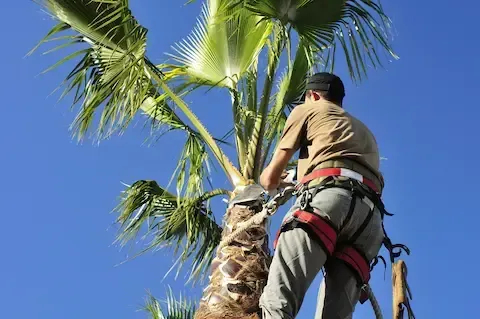
Palm Frond Trimming Frequency in Chalmette LA Yards
In Chalmette, palm fronds should be trimmed once per year for most residential palms. Remove only brown, dead, or fully drooping fronds. Never cut green fronds, as they continue feeding the tree. Over-trimming, sometimes called hurricane cutting, weakens palms and invites pests and disease. The best time to trim is late spring before hurricane season begins. Palms in coastal Louisiana face salt spray, wind stress, and high humidity, which means they need every healthy frond they can keep. A clean annual trim focused on dead material is the right approach for most Chalmette yards.
How Often Should You Trim Palm Fronds in Chalmette?
Once a year is the standard recommendation for palm frond trimming in Chalmette, Louisiana. Unlike shade trees that benefit from more frequent structural pruning, palms grow from a single central point called the meristem. Damaging or over-stressing that growth point by removing too many fronds at once can permanently injure the tree. Annual trimming timed to late spring, typically April through May, removes the previous season's dead material before summer storms arrive. If your palm produces fruit or seed pods that you want to manage, those can be removed during the same visit without adding extra stress.
Which Fronds Should Actually Be Removed?
Only fronds that are completely brown, dry, or hanging at a downward angle below horizontal should be cut. A frond that still shows any green, even at its base, is still photosynthesizing and contributing energy to the tree. In the heat and salt air common to St. Bernard Parish, palms work harder than they would in drier climates. Stripping away productive fronds forces the tree to pull nutrients from its trunk reserves, which weakens it over time. A useful rule is to imagine a clock face: only remove fronds pointing below the nine and three o'clock positions. Fronds pointing outward or upward should stay.
What Happens If You Trim Too Often or Too Aggressively?
Over-trimming is one of the most common mistakes seen in local yards across Chalmette and the surrounding communities. When too many fronds are removed at once, the palm enters stress mode. Stressed palms are significantly more vulnerable to Ganoderma butt rot, a fungal disease that spreads through soil and has been documented in palms throughout South Louisiana. They are also more attractive to the red palm weevil, an invasive pest that targets weakened palms. Hurricane cutting, which involves removing fronds all the way up to the crown, was once thought to reduce wind damage during storms. Research has since shown the opposite: full canopies are more aerodynamic and better at shedding wind than stripped trunks topped with a sparse tuft of fronds.
Does Palm Species Affect Trimming Frequency in Chalmette?
Yes, and it matters more than most homeowners realize. Sabal palms, also called cabbage palms, are native to Louisiana and naturally self-clean by dropping old fronds on their own. These trees rarely need more than one light trim per year, and many do fine with trimming every eighteen to twenty-four months. Washingtonia palms, which are commonly planted along driveways and commercial properties in the Chalmette area, retain their dead fronds and form a dense skirt. That skirt should be removed annually because it harbors rats, roaches, and fire ants. Queen palms and date palms are more sensitive and benefit from professional assessment before any trimming is done, especially after a storm season. For guidance on species-specific care, reviewing a local palm health overview can help you understand what your specific tree needs before you schedule any work.
When Is the Wrong Time to Trim Palms in Chalmette?
Avoid trimming palms in late summer and fall during active hurricane season unless fronds are damaged and pose a hazard. Trimming during this period opens fresh wounds right when wind-driven rain and fungal spores are most active. Winter trimming is also generally discouraged because palms in cold stress are slower to recover from pruning cuts. The period between late October and February sees cooler temperatures in St. Bernard Parish, and palms trimmed during this window may show delayed stress responses the following spring. If a severe storm has snapped or shredded fronds, removing that material promptly is still the right call regardless of season, but avoid elective trimming outside the spring window.
Should You Hire a Professional or DIY Palm Trimming?
For palms under fifteen feet, experienced homeowners can safely trim with the right equipment: sharp loppers or a pruning saw, gloves, and eye protection. Sanitizing your cutting tools with a diluted bleach solution between trees prevents the spread of fungal disease, which is a real concern in the humid conditions common to coastal Louisiana. For taller palms, professional service is strongly recommended. Falls from palm trunks are one of the leading causes of serious yard maintenance injuries. Professionals also recognize early signs of disease, nutrient deficiency, and pest activity that most homeowners would miss. If you are unsure about the condition of your palms before trimming, scheduling a consult through a qualified palm tree care provider gives you an informed starting point before any cuts are made.
