Chinese Tallow Removal Across St. Bernard Parish Yards
Chinese tallow trees are one of the most aggressive invasive species spreading through Southeast Louisiana, and St. Bernard Parish yards are among the hardest hit. What often starts as a single fast-growing tree can become a thicket within a few seasons. The white waxy seeds travel by wind, water, and wildlife, and the species has no meaningful local predators to slow it down. If you have ever noticed a weedy-looking tree with heart-shaped leaves and a cluster of white berries appearing uninvited along your fence line or near a drainage ditch, you have likely already encountered this plant. Understanding how to address it effectively — and why you need to act quickly — is essential for anyone maintaining property in Chalmette, Arabi, Meraux, or anywhere else in the parish.
What Makes Chinese Tallow So Difficult to Control
Chinese tallow, known scientifically as Triadica sebifera, was introduced to the United States in the 1700s for its oil-producing seeds and was later promoted as an ornamental. It thrives in Louisiana's wet, humid climate and has spread aggressively across coastal wetlands, floodplains, and residential yards throughout the Gulf South. In St. Bernard Parish, the combination of flat terrain, abundant standing water after rain events, and warm winters creates near-perfect conditions for this tree to establish and multiply.
What makes tallow particularly frustrating is its resilience after cutting. If you simply cut the trunk and walk away, the stump will resprout vigorously. The root system remains alive and pushes out new growth rapidly. This regrowth often appears within a few weeks of removal, and if left unchecked, the new shoots can reach several feet in height by the end of a single growing season. This is why removal is only half the battle — treatment of the stump and root system must follow immediately.
The tree also produces enormous quantities of seed. A mature tallow can generate tens of thousands of seeds per year, and those seeds remain viable in the soil for extended periods. Even after you successfully remove established trees, seedlings continue emerging from the seed bank in the surrounding soil for several years afterward. Consistent monitoring and follow-up are not optional — they are built into any realistic removal plan.
Identifying Chinese Tallow on Your St. Bernard Property
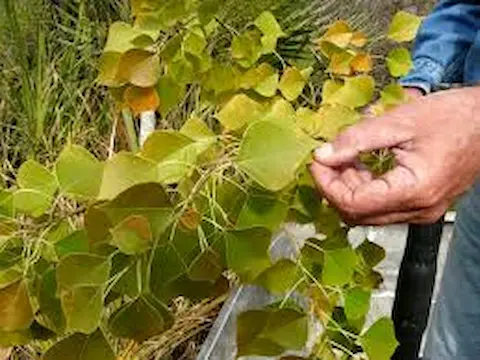
Before removal begins, you need to be confident in what you are removing. Chinese tallow has several distinguishing characteristics that make it identifiable through most of the year. The leaves are diamond or heart-shaped with a pointed tip and emit a faint, distinctive odor when crushed. The tree produces small yellow flowers in spring followed by three-lobed seed capsules that split open in fall to reveal white waxy seeds that look like popcorn, which is how the tree earned its common nickname "popcorn tree."
In fall, tallow puts on a showy display of red and orange foliage that can look attractive, which is part of why homeowners sometimes allow it to mature before realizing what they have on their hands. The bark on younger trees is relatively smooth and grayish-brown, while older specimens develop a rougher, more deeply furrowed texture. The growth habit is upright and multi-branched, often forming a broad canopy within five to ten years.
In St. Bernard Parish, you are most likely to find tallow along fence rows, in corners of yards that receive less attention, near drainage swales, and along the edges of wooded areas. Properties near the marsh fringe or those with low-lying areas that hold water are especially vulnerable because the seeds travel readily through floodwater and accumulate in areas where sediment deposits.
Why Timing and Method Both Matter
Effective Chinese Tallow Removal in St. Bernard Parish requires attention to both timing and technique. The most reliable removal window is late summer through early fall, when the tree is actively transporting nutrients down into its root system. Treating stumps during this period allows herbicide to move into the root mass more effectively, reducing the likelihood of aggressive resprouting.
The cut-stump method is the most practical approach for most residential properties. The tree is felled as close to the ground as possible, and an appropriate herbicide — typically one containing triclopyr or imazapyr — is applied directly to the freshly cut surface within minutes of cutting. Speed is important here because the wound begins to seal quickly, especially in warm temperatures. Delaying treatment by even thirty minutes can significantly reduce uptake and effectiveness.
For smaller saplings and seedlings, foliar spray application is often used during the active growing season when leaves are fully developed. Basal bark treatment, where herbicide is applied directly to the bark of the lower trunk without cutting, is another option suited to trees under a certain diameter. Each method has its place depending on the size of the tree, the location, and proximity to water bodies or desirable vegetation. In low-lying areas or near waterways — common in St. Bernard Parish — product selection must also account for aquatic restrictions on certain herbicide formulas.
Clearing Multi-Tree Infestations in Chalmette Yards
Single tree removal is manageable. Multi-tree infestations require a different approach. When tallow has spread across a substantial portion of a yard or lot, clearing needs to be phased to avoid overwhelming disruption and to maintain control over regrowth. Removing all vegetation at once on a large area often triggers a flush of seedling emergence from the soil seed bank. A phased approach, combined with follow-up monitoring and treatment, tends to produce more lasting results.
In Chalmette and the surrounding communities of St. Bernard Parish, lots often sit on clay-heavy soils that hold moisture and provide ideal germination conditions for tallow seeds. After clearing, these sites benefit significantly from rapid replanting with desirable native species that compete with tallow seedlings for light and space. Allowing bare ground to remain for extended periods after removal is one of the most common mistakes property owners make — and it is one of the most consequential.
Native trees and shrubs that establish well in the parish's conditions include bald cypress, swamp red maple, eastern red cedar, and wax myrtle. These species are adapted to local flood cycles and soil conditions, and they grow quickly enough to provide meaningful competition to any tallow seedlings that emerge from residual seed in the soil. For guidance on selecting the right species for your specific site conditions, a local palm health overview and broader tree selection guidance can help you understand how different species perform in this climate.
Regulatory and Environmental Considerations in St. Bernard Parish
Chinese tallow is listed as a noxious weed or invasive species under Louisiana state law, and there are ongoing efforts at both state and local levels to control its spread in natural areas. For residential property owners in St. Bernard Parish, this means that removal is not only permitted but actively encouraged. However, when removal involves herbicide application near waterways, drainage canals, or wetland areas, additional care is required.
St. Bernard Parish has an extensive network of drainage canals and low-lying areas that are directly connected to the larger wetland system of Southeast Louisiana. Herbicide products used near these areas must be labeled for aquatic use, and application should be timed to avoid periods of active flooding or heavy rain that could carry material into waterways. Professional applicators with Louisiana pesticide applicator licensing are required to follow specific protocols when working near water, and property owners should be aware of these restrictions if considering DIY removal near drainage features.
There are no parish-level permits required specifically for removing invasive trees on private residential property, but if you are working near a regulated waterway or within a designated floodplain area, it is worth checking with the parish or the Louisiana Department of Wildlife and Fisheries before proceeding with large-scale work.
Preventing Reinfestation After Removal
The goal is not just to remove what is currently growing — it is to prevent tallow from reestablishing over the following years. This requires a shift in mindset from a one-time project to an ongoing maintenance commitment. After initial removal, inspect the area every four to six weeks through the growing season and treat new seedlings while they are small and still vulnerable. Seedlings in their first few weeks of growth can often be pulled by hand if the soil is moist, which avoids additional herbicide use.
Mulching cleared areas with a thick layer of wood chips can help suppress seedling emergence by blocking the light that newly germinated tallow seedlings require. Maintaining a healthy canopy of desirable trees and shrubs above the cleared area also reduces available light at ground level and creates conditions less favorable to tallow establishment.
Neighbors' properties matter too. Tallow does not respect property lines, and seeds from trees on adjacent lots will continue to arrive on your property regardless of how thoroughly you remove your own trees. Coordinating with neighbors or encouraging community-level awareness in your Chalmette or Arabi neighborhood can extend the effectiveness of your own removal efforts significantly.
When to Call a Professional Tree Service
Some tallow removal work is manageable for a motivated homeowner with the right tools and products. Saplings under an inch in diameter, accessible locations away from structures, and small seedling populations can often be handled without professional assistance. But as tree size increases, as infestations grow more complex, or as the work moves closer to structures, utilities, or water features, the risk calculus changes.
Large tallow trees can reach heights of thirty to forty feet and develop significant trunk diameters. Felling trees of this size safely requires chainsaw skill, proper equipment, and situational awareness that accounts for fall zones, overhead hazards, and soil conditions. In St. Bernard Parish, where properties are often small, fences are close together, and overhead utility lines are common, a miscalculation during tree felling can cause serious damage or injury.
Herbicide application also becomes more technically demanding as the scale and complexity of the infestation increases. Proper mixing ratios, surfactant selection, appropriate personal protective equipment, and application technique all affect outcomes and safety. Working with a licensed tree service familiar with the invasive species management requirements specific to Southeast Louisiana ensures that the job is done correctly the first time — which matters a great deal when you are trying to prevent a species as persistent as Chinese tallow from regaining a foothold in your yard.
